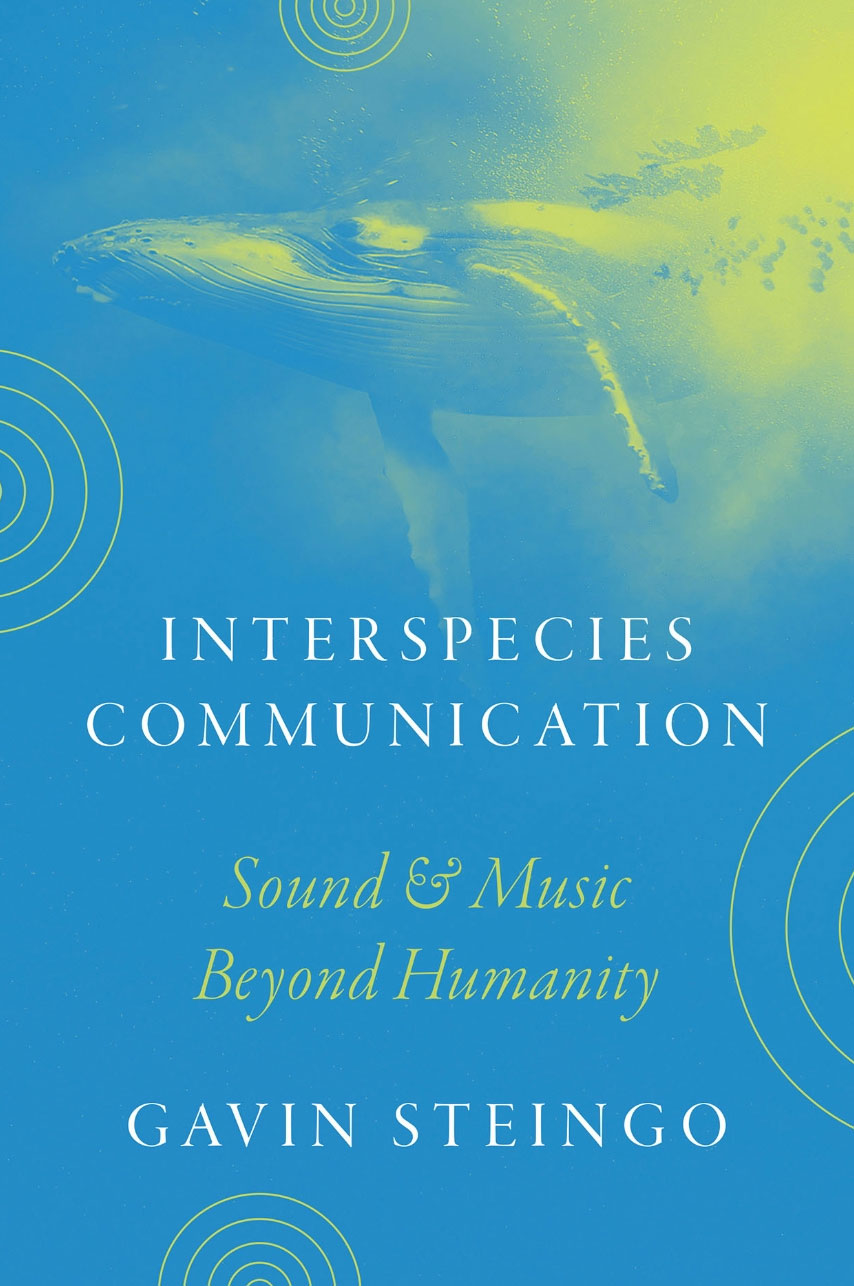
Interspecies Communication, Sound and Music Beyond Humanity (University of Chicago Press, 2016)
A surprising study reveals a plethora of attempts to communicate with non-humans in the modern era.
In Interspecies Communication, music scholar Gavin Steingo examines significant cases of attempted communication beyond the human—cases in which the dualistic relationship of human to non-human is dramatically challenged. From singing whales to Sun Ra to searching for alien life, Steingo charts the many ways we have attempted to think about, and indeed to reach, beings that are very unlike ourselves.
“Humanity needs this book.” – John Durham Peters
More

Gavin Steingo and Asif A. Ghazanfar, “Virtual Universals and Creativity: A New Approach to Music Cognition.”
Music & Science 8(20205): 1-7. PDF
If music is so varied, how do we understand it? Is there anything universal about it? And if not, can there be a cognitive science of it? Radically limiting examples so they fit certain frameworks but then calling everything else an exception is not helpful. We propose a redefinition of music that is based not on specific features but rather as creative experimentation with what we term “virtual universals.” These are universals that exert force even when they are not actualized or sounded. Our argument has applicability beyond the domain of music; in principle, the ideas in this paper could be applied to any domain of human behavior.
Asif A. Ghazanfar and Gavin Steingo, “Groove to the Music: What Can Tapping Macaques Reveal about the Evolution of Musicality?”
Science 390.6776(2025): 885. PDF
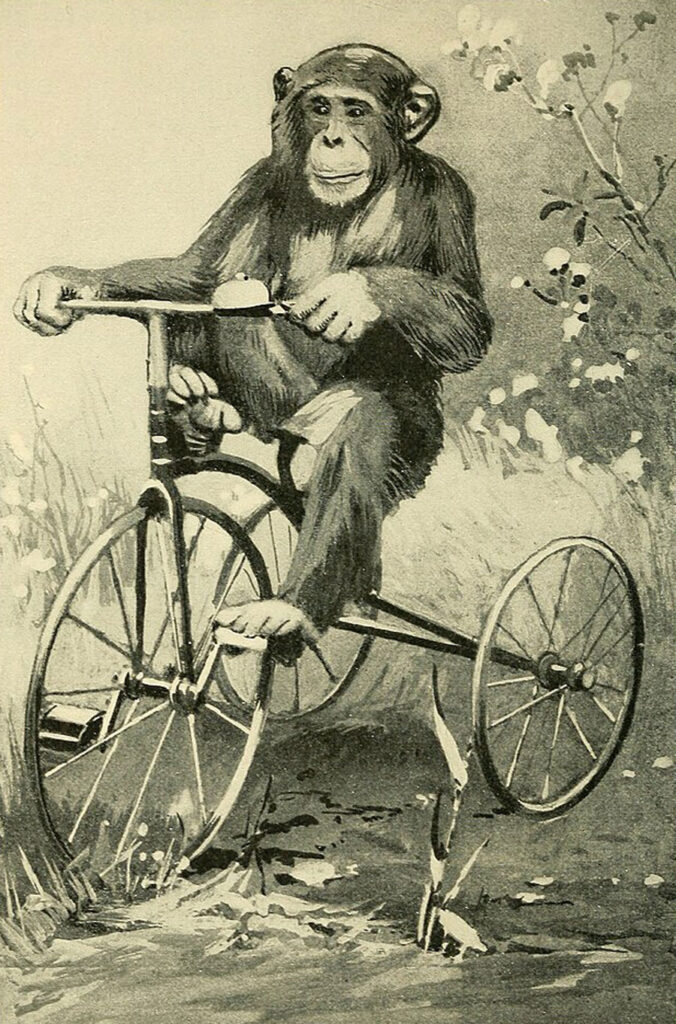
We wrote this as a response to Vani G. Rajendran et. al.’s article “Monkeys Have Rhythm” (Science 390.6776(2025): 940-944). In our response, we ask what training a monkey to keep rhythm really tells us about evolution. We write: “Could a monkey trained to ride a bike help to understand the evolution of human bike riding? Studying this process would not uncover a monkey’s hidden capacity to ride a bike, but rather it would simply show how conditioning could make it adopt a human ability that was acquired through cultural evolution… Rajendran et al. show that monkeys can have rhythm when trained, while pointing out that monkeys do not have rhythm in natural conditions. The implications of their findings for the evolution of music remain undertheorized.”