Hermanus
Tales of Love
Gavin Steingo
In October 2015, I traveled to Hermanus, South Africa—smack dab in the middle of the town’s annual Whale Festival, a week-long eco-tourism event focused on whale watching and conservation. Both real and fictional whales had drawn me there, and I was eager to explore the resonances between the two, as well as the whale-centered humans I had been thinking about. The initial motivation for my trip came from the 2005 novel The Whale Caller by Zakes Mda, one of South Africa’s most renowned authors. Set in Hermanus, Mda’s novel narrates the story of a man who develops an intimate relationship with a southern right whale he calls Sharisha. Because of the different worlds they inhabit—land versus ocean—the Whale Caller can only interact with Sharisha through sound. He plays music to and for Sharisha with a kelp horn, an ancient instrument nourished by the ocean.
The kelp horn used by the Whale Caller in Mda’s novel is an actual instrument with a long history. It is mentioned, for example, by the Swedish naturalist C. P. Thunberg in 1772 and described in greater detail by Percival Kirby in his seminal (if ideologically dubious) Musical Instruments of the Native Races of South Africa in 1934. Kirby mentions that the curved version of the instrument produces exactly three notes and has a “powerful horn-tone quality.”
In the novel, Mda tells us that when the Whale Caller plays his horn for Sharisha, she responds “with her own love calls.” As he plays, he dances, and to this Sharisha responds with a kind of dance of her own, a sequence of “rocking, breaching and lobtailing.” The instrument’s sound wavers between a military bugle call and the “fast-paced scatting of a demented jazz singer.” Mda writes that the Whale Caller’s horn “penetrated deep into every aperture of the whale’s body, as if in search of a soul in the midst of all the blubber.” The encounter between man and whale continues throughout the night, ending only when the sun rises the following morning. The Whale Caller finally collapses in exhaustion, and Mda notes that “The front and seat of his tuxedo pants were wet and sticky from the seed of life.”
The Whale Caller is a strange book, which, like Mda’s others, seems to teeter between allegory, Magical Realism, and deep African spiritualism. Reading Mda is like inhabiting the liminal space between wakefulness and sleep, where vivid images are bathed in an ether of unreality.
But reality surfaces at critical junctures. Throughout the novel, Mda insists on a sharp distinction between his protagonist, the Whale Caller, and the so-called whale crier of Hermanus, who is based on, and in fact shares a name with, the real-life person who holds this position. Employed by the town’s local tourist bureau, the whale crier has a role similar to town criers of old, except that he only ever proclaims one thing: the presence of whales in the bay. “The Whale Caller was not in competition with the whale crier,” writes Mda. “The Whale Caller was not a whale crier but a whale caller! . . . The whale crier alerted people to the whereabouts of whales, whereas the Whale Caller called whales to himself.”
In other words, the Whale Caller establishes a human/animal relationship, while the whale crier participates only in human/human relationships, and Mda takes the latter to be far more mundane. Some way into the book, the Whale Caller hears the sound of the whale crier’s horn. Mda mentions the crier by name: “The Whale Caller knows immediately that it is the official whale crier of Hermanus, Mr. Wilson Salukazana, the gracious gentleman from Zwelihle Township. He is alerting tourists to the presence and location of the whales.”
At this moment, the Whale Caller meets his mirror opposite: the mundane whale crier of Hermanus, who calls only people and never whales. But the relationship between the two is more complicated than this, because the real-life Mr. Wilson Salukazana was a kind of negative inspiration for Mda when he was writing the novel. In an inter-view with the journalist Angelique Serrao, Mda recounts that he first conceived the idea for The Whale Caller after he saw Salukazana on a television program about whales: “From the programme I thought that the man called the whales to him on his kelp horn, and I thought this was a magical thing. So I went to Hermanus to find out about this and I found that he doesn’t call the whales, he lets tourists know where they are. I was very disappointed, but I thought, ‘let me create this magical thing in my novel.'”
What would have given Mda this false impression? What led the novelist to believe that “the man called the whales to him on his kelp horn”? And who is this entirely disappointing whale crier? Surely Wilson Salukazana’s existence is not reducible to the negative image of Mda’s fictitious Whale Caller? What might the whale crier think about the Whale Caller? Given the demographics of the region (the largest population group is Xhosa-speaking), I also wondered whether whales have a place in Xhosa cosmology and, more generally, what that cosmology says about human/animal relations. Both Mda and Salukazana came from Xhosa-speaking families, and the two men would have been raised with at least some of the same traditions.
These were some of the issues I intended to investigate when I traveled to Hermanus in October 2015. During this period, I had been ruminating on other instances of human/animal intimacy, such as the famous example of Alex the parrot. And I had not forgotten, as I drove the winding mountain paths along the ocean, that Mda’s book is really about one thing: love. Mda imagines the relationship between a human and a whale as both loving and downright sexual. The Whale Caller directs all his emotional and libidinal energy at Sharisha, who seems to offer him something that human society cannot. Love came up time and time again as I followed the threads between Mda’s novel and the real people of Hermanus—even and especially when I least expected it. This chapter explores the intricate interactions between humans and whales in Hermanus before turning to examples from other times and places. It asks a few related questions: What are the ways to love a non-human? What kind of material or earthly form might this love take? Is there an ethics of human/animal love? Is there a politics?
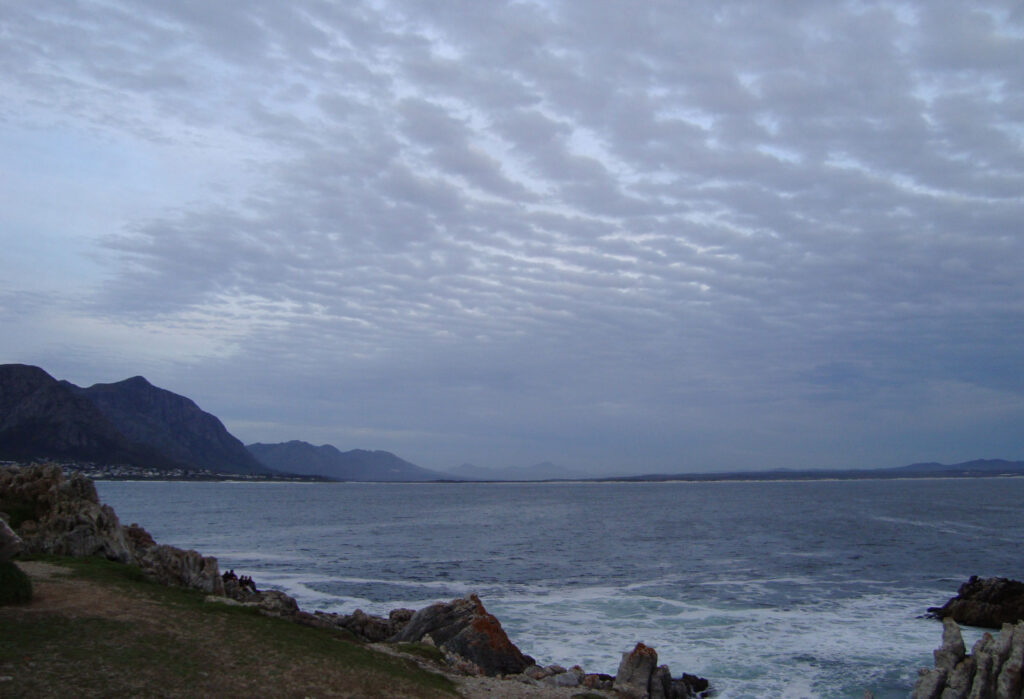
The trip to Hermanus in 2015 was my first visit to the area since 1997. I grew up in Johannesburg (South Africa’s largest city) and during my high school years twice attended a “socialist” Jewish summer camp in Onrus, a town roughly five miles from Hermanus. It was strange to be back in this part of the world after nearly twenty years; it was stranger still that in some ways nothing had changed. Like many such towns in the Western Cape, Hermanus is naturally beautiful and deeply segregated. At the cafes and restaurants that line the grassy area mar the craggy cliff overlooking the bay, Black waiters from surrounding townships serve tourists and locals, including the many White Afrikaans teenagers who fill the air with laughter and plumes of cigarette smoke. Children play in rock pools far below the cliffs, while elderly Black men hawk beads and clay sculptures to passing tourists. People perch on rocks, gazing out beyond the bay toward the horizon—a diverse group of Xhosa and Afrikaans locals, visitors from surrounding areas, and a smattering of international tourists.
I remember the scene like it was yesterday: Everyone is waiting to see a whale breach, to appear from the depths, seeming to banish time as it hovers in the air for that one jewel-like moment. A Bob Marley song seems to hover on the breeze from a restaurant whose location I cannot determine. A White girl, no older than eleven or twelve, scrunches her nose and asks no one in particular, “Wat is daardie slegte musiek?” (What is that hor-rible music?) I chuckle softly.
Exploring the town on my first morning there, I could find no trace of Wilson Salukazana, the whale crier mentioned in Mda’s book. It turned out that a spry young man, Eric Davalala, had taken his place. As I would soon learn, Eric had assumed the mantle of official whale crier in 2011, and by late 2015 he was being touted as the world’s only Whale Crier (TM) —the position had been trademarked by the tourist bureau.
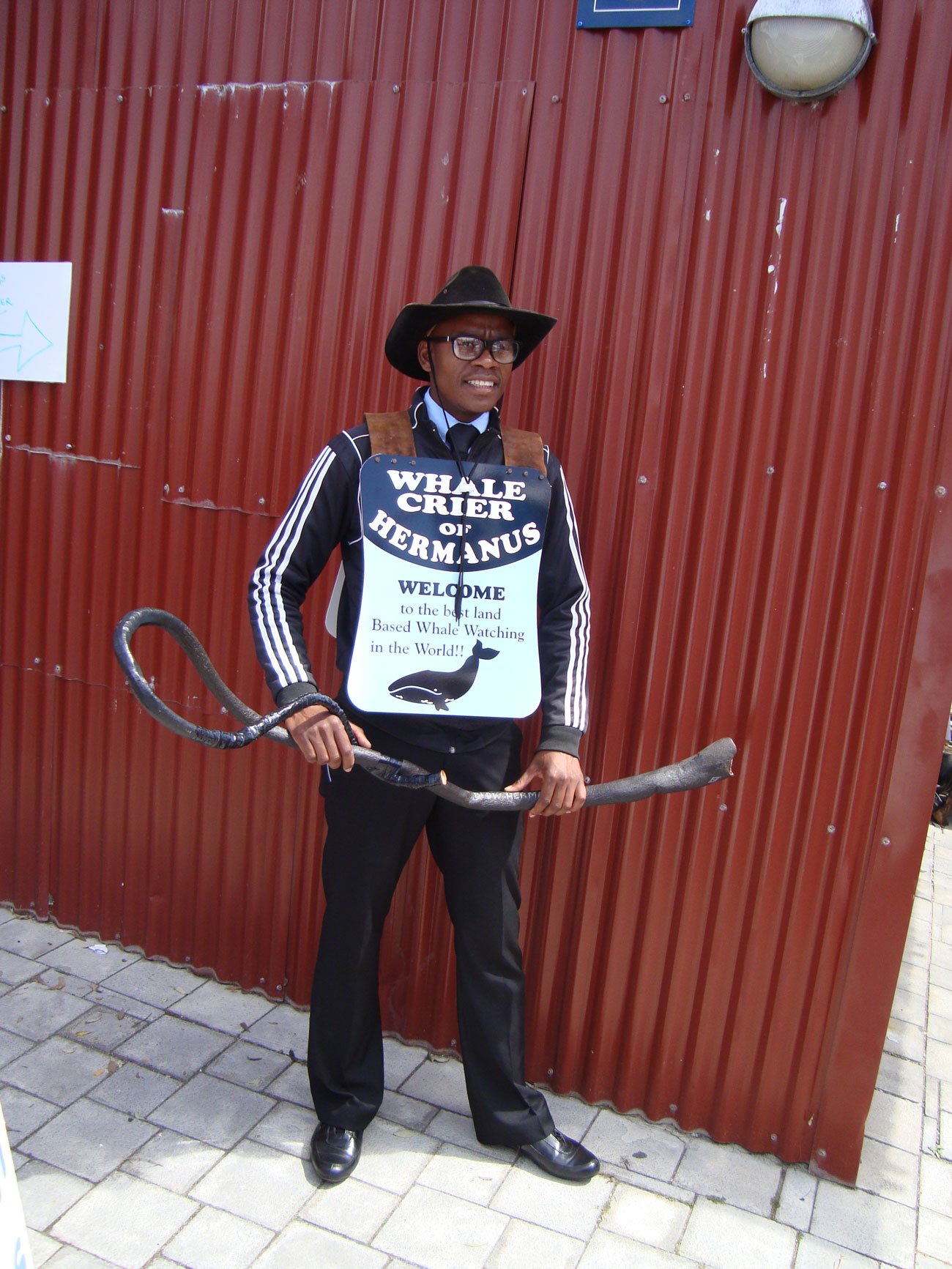
On the day I met Eric, the weather was gloomy, and the sightings had been nil. I opened with a leading question: “So I see you posing with this horn. But I didn’t hear you blow it yet. Why?” His response came without hesitation: “OK, this is my kelp horn. I blow the horn only if there’s whales in the bay. Most of the people thought that the whale crier blows the horn to call the whales. But he only blows the horns to inform the people that there are whales to be seen in the bay.” I was stunned. After all, Mda had said in the interview that he learned that the whale crier “doesn’t call the whales, he lets tourists know where they are.” Now Eric had just told me that “most of the people thought that the whale crier blows the horn to call the whales.” Most people thought that? Which people was he referring to?
Eric clarified that by “most people” he meant Xhosa-speaking locals, not tourists. The locals’ mistaken belief that whale criers communicate with whales is based, Eric suggested, on a kind of spurious causality. He told me that when he blows the horn, the whales “do something like a performance, sometimes you see them playing, or coming up and down all the time. And that’s when they thought that now I’m really calling them.” But despite his strong position regarding the ignorance of “most people,” the young whale crier declared that the whales do listen. “They do hear me,” he said. “Sometimes they check out—we call that spy hopping. You can see that on the poster there,” he said, pointing to an educational poster on the wall inside the tourist kiosk. “The whales always want to know what is going on. It’s not that we call them,” he said. “They’re just curious. They’re so inquisitive. They like people so much.”
But as he made this last comment, Eric seemed to feel that he had allowed his enthusiasm to range too far. His anxiety stemmed in part from a need to distance himself from his predecessor, Wilson Salukazana, that feckless whale crier whom Zakes Mda so sharply contrasts with the Whale Caller in his novel. I was astonished to hear Eric’s thoughts: “As I said to you, most of the locals, those are the ones that have grown up thinking that Wilson Salukazana blows the horn to call the whales. Because when they come down here, they say: ‘This guy [i.e., Eric] is not calling the whales anymore. Wilson Salukazana used to call them.’ So I need to tell them. You see, when I’m there, I explain to them what is going on. Because they don’t know.”
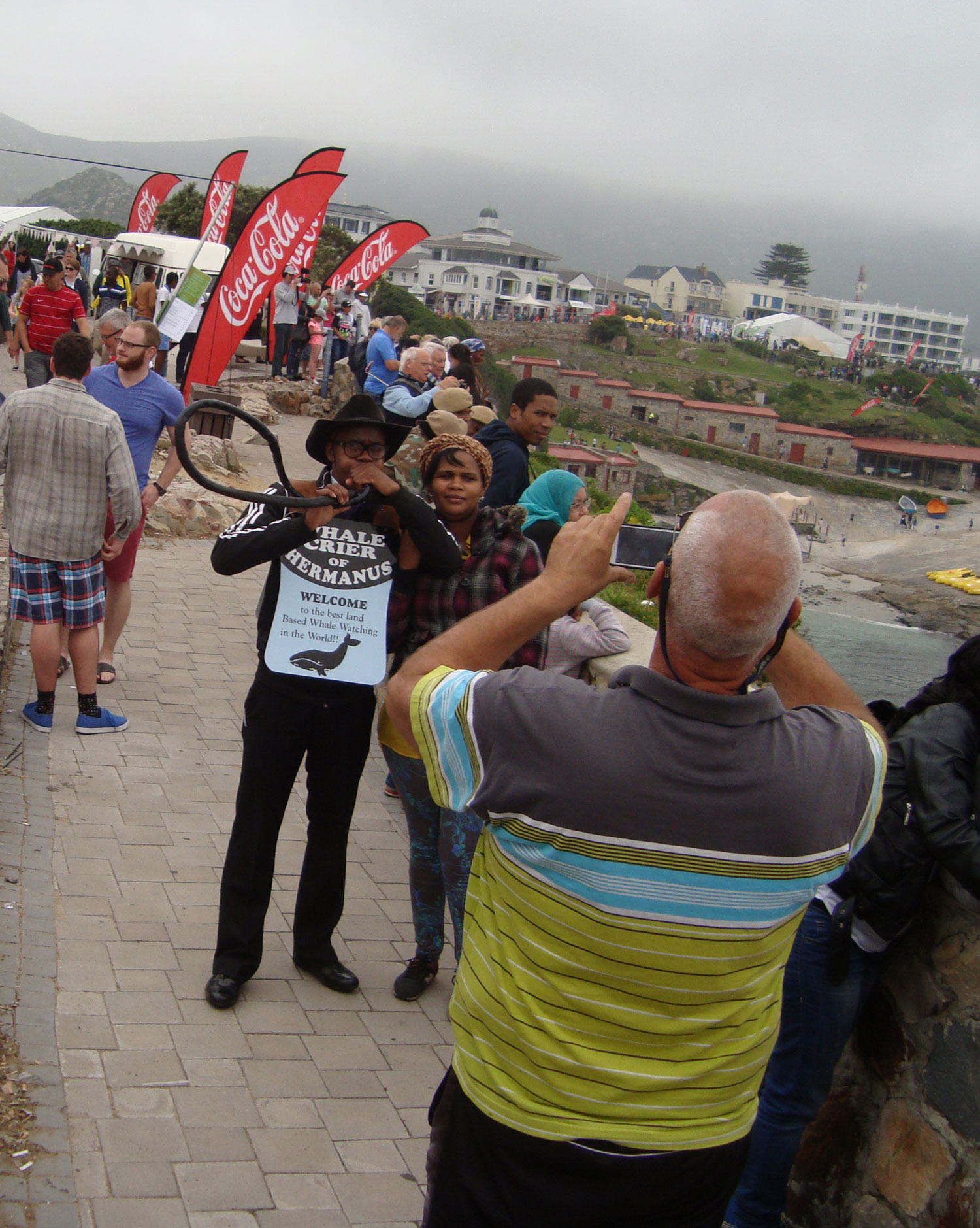
Eric has a dual motivation for explaining things to the locals. First, it is simply part of his job to educate people about whales and their environment. But a second reason is that his own practice, which consists primarily of notifying tourists where whales can be seen, is banal in comparison with what “most of the locals” believe that Wilson used to do. Here, Mda’s Whale Caller/whale crier distinction is played out again, although this time it is Wilson Salukazana (identified by Mda as a mere “whale crier”) who is designated as a Whale Caller. (Or, more precisely, he is designated as an alleged Whale Caller, since Eric does not believe that one can in fact call whales.)
I had heard and read a fair amount about Wilson Salukazana by this point, but it was clear that I would need to meet the man in person. Finding the retired whale crier proved challenging, however. My inquiries sent me on a wild goose chase from tourist offices to museums, zig-zagging between town, harbor, and beachfront. For days, I searched in vain. And then, when I had exhausted all official channels and was feeling defeated, I turned to an approach that had served me well in earlier field-work in African towns and cities: I drove to the local petrol station and asked the first person I encountered. In a turn of events that seemed miraculous at the time, a petrol attendant named Philemon told me he was related to Wilson Salukazana through marriage and that he would be happy to take me to Wilson’s house in the township just outside Hermanus.
In a rental car on the way to Zwelihle township, Philemon told me that Wilson was old and had poor eyesight, but that he was well looked after by his children, who had solid employment. And then, without any prompting, Philemon declared, “Wilson is a magic man. He blows his horns to invite the whales.” My jaw dropped. When I asked him about Eric Davalala, Philemon repeated, “Wilson is a magic man.” He added, dismissively, “Eric just blows.”
In contrast with Hermanus, Zwelihle has almost no tourists. But there were lots of people around, including groups of young men and women gathered in conversation outside storefronts and on street corners. Philemon told me that many unemployed young men in the township are addicted to tik (crystal meth); and, warning me to keep my distance, he explained that they have devised a peculiar form of theft. These young men blow a sleep-inducing powder into a house’s window. Once the inhabitants are asleep, the thieves can then easily enter the house and help themselves. According to Philemon, the sleeping powder is made from crocodile bones. We seemed to have crossed, at some point, not only a geographical but an epistemological threshold.
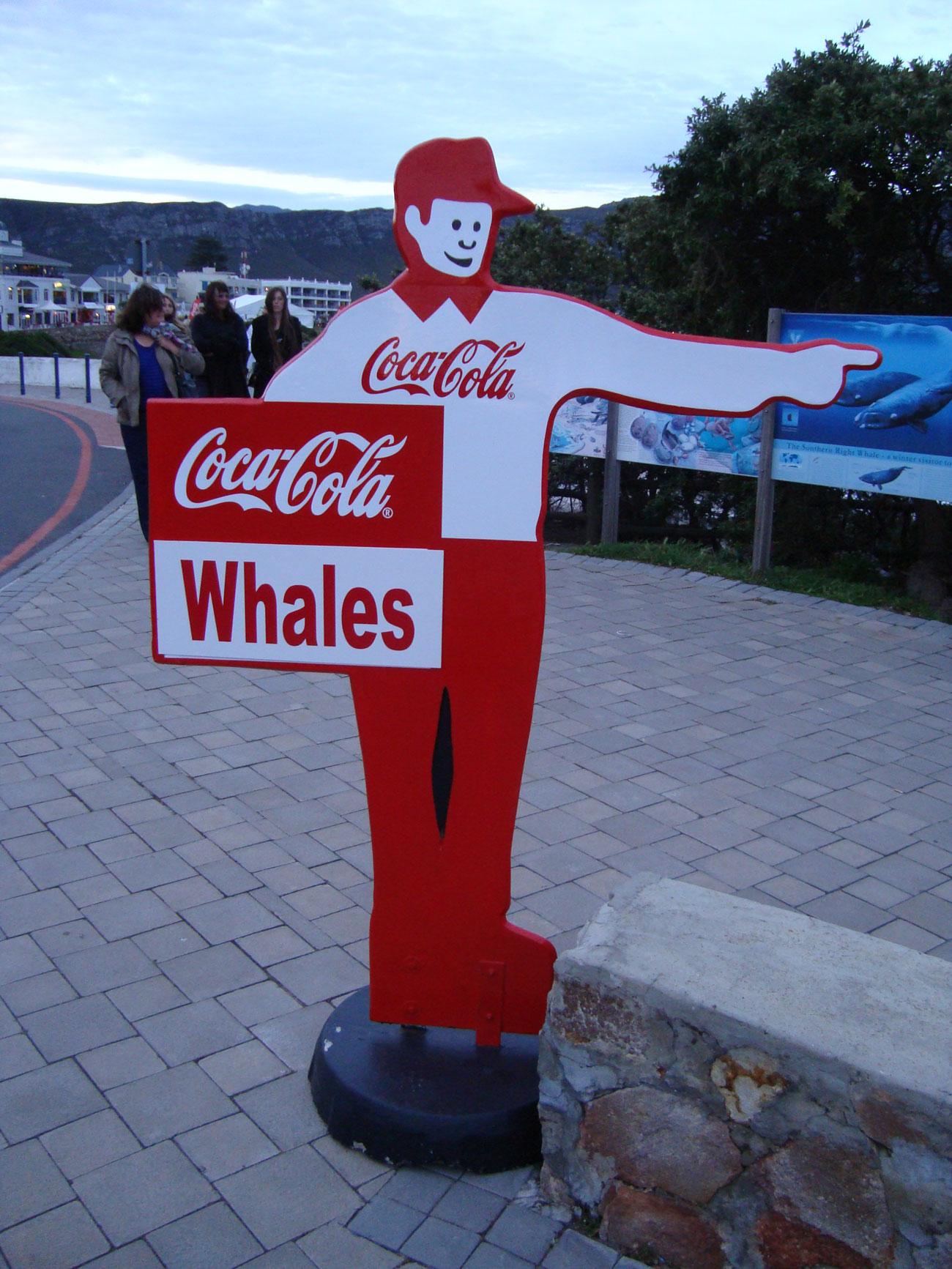
Zwelihle is worlds apart from Hermanus in terms of wealth and appearance, though it lies a mere three miles to the southwest. Wilson’s is a typical township home; row upon row of these small, square, “matchbox” houses were built during apartheid as dormitory cities for Black workers on the outskirts of cities and towns. When Philemon and I arrived, two small children were watching TV in the living room, and one of them went into the bedroom to call his grandfather.
Wilson Salukazana the whale crier entered. He was a bit disoriented from having just woken up and was understandably surprised by my unscheduled visit. I explained to Mr. Salukazana that I was interested in his former work as a whale crier and that I would like to know more about it.
If Eric and Philemon had built up my expectations about Wilson being, or perhaps posing as, a magical communer with whales, these expectations were quickly dashed. Wilson recounted his past whale crying duties plainly: “You know when the whales come close by the shore, then I have to blow the horn, you see? . . . So that the tourists can come and take pictures with the whales. And some people forget about whale watching—they get busy with me. Because I had that regalia, uniform, with that hat, with that horn.”
I would have looked to Philemon for support, but he was outside smoking a cigarette. I was weary of projecting fictional transformations of Wilson onto the man himself (now sitting in front of me, in the flesh) but given both Eric’s and Philemon’s testimonies, I felt it was reasonable to ask. So I stammered, “Some people say you used to call the whales with the horn?” Slightly surprised by my question, he replied, “Yes, I mean, that is a technique—the technique that I used to use. I don’t know how did it happen, but it happens. Because sometimes when I blow the horn, for that particular code, and then you see the whales springing up, jumping up, you know.”
The conversation that followed was awkward, to say the least. It would be dishonest to say that I went into the interview without an agenda. I hoped, of course, to hear about Wilson the “magic man” and not Wilson the tourist curiosity. But for the most part, at least if one discounts elliptical statements like the one above (“I don’t know how did it happen, but it happens”), Wilson basically denied any direct communication with whales. This was in sharp contrast with Philemon, who insisted on Wilson’s ability to communicate with them.
For example, when Philemon had returned from outside, and we were all together in the living room, I asked Wilson, “Do you think they know you? Do you think the whales know you from being there all the time?” To this, Wilson simply laughed, seeming uncertain how to respond, but Philemon was nodding vigorously, and then said, “Spiritually.” He paused briefly before repeating, “Spiritually.”
Later in the conversation, I asked Wilson if he misses the whales since retirement. He answered that he does, and he remarked that sometimes he drives down to the bay to watch them in the water. But this still did not tell me much, so I asked another question: “Do you have an emotional connection with the whales?” To this, Wilson responded flatly, “I don’t have a connection with them.” But then he said, “You know, it’s just because—when you love a thing at heart, it always happens. It always happens, people then sometimes think that you’ve got a magic that you are doing. Because I used to [i.e., when he worked near them] love these animals at heart.” He continued in a somewhat convoluted and confusing way: “You know, I was seventy-one years old when I got to New Harbour for whale watching. And I worked there until I was seventy-four years old. So well, maybe, I’m tired, that’s why. . . . Well, I used to love them. I don’t know what to say. I used to love these animals at heart. I still love them.”
To my ears, this was anything but clarifying. How to square the declarations of love with the statement, “I don’t have a connection with them”? Was the implication simply that the love only traveled in one direction, that it was unrequited? Or did he mean something else? Philemon, who insisted on Wilson’s spiritual connection with whales, had a different explanation. Later that day when we were alone, he told me that Wilson is a Born Again Christian and therefore finds it necessary to distance himself from certain Xhosa traditions. Philemon seemed to suggest that Wilson simply could not admit (to me or to himself, I was never certain) that he has a spiritual connection with whales. But for Philemon, the connection is obvious. As he told me, “In our tradition, we believe that in the water—we’ve got our ancestors there. That’s why he blows the horn, so that the whale can hear the sound.”
But Wilson never said anything like that, at least not directly. He did, however, allude to some kind of spiritual connection at the end of our conversation. After saying, “I used to love these animals at heart,” he briefly paused and told a story. Later, on our way back to town, Philemon suggested that Wilson’s story was intended as a kind of parable about ancestors told by a devout Christian who could not, in good conscience, allow himself to openly expound his belief in occult forces, especially not in public and on record. I will never know for certain whether Wilson meant the story this way. In any event, it concluded our meeting that day. I present the tale here in full.
One day we were there by De Kelders. And it was a new skipper at the boat. I was sitting there with people from Italy, guiding them in the boat. . . . So there near De Kelders we saw the whales. But they were very close to the shore. Because you see when we watch we go to Kleinmond, Hawston, Sonesta Beach. Or we go to near De Kelders, therrrrre [he stretched out the word like a sung note], the place called Die Plaat. That’s where you find them. So what happens is that the skipper was new. He didn’t know how to judge the wave. So this man, what he did—we went right by the shore there, [and] the seas come suddenly behind us. . . . Big wave, bigger than this house. That day, I thought I was going to die. And then the wave hit the boat on the side, and as I was standing like this [Wilson demonstrates], then I fall right into the water. Luckily, he thought he must switch the boat off because of the propeller. Dangerous, heh? Because I swim right, right round—the water brings me back to the propeller.
[Philemon exclaimed, “Hayibo!” (Unbelievable!)]
So when I come there, lucky I didn’t breathe. I was brave enough, you know. That’s why we say we must believe to our ancestors. Maybe our ancestors were looking at me. Holding me.
[“They were watching you. You were protected,” Philemon interjected.]
So I didn’t breathe. After five minutes I came up behind the boat. When I came up, I peer, emerge—I see, “Oh, there is the boat, the handle.” Then I push myself . . . And then I come up and they hold me and they pull me into the boat.
The story ended. Glancing at me, Wilson added, “Ja, I’m trying to say, it’s like that.”
It’s like what, exactly? Straining our ears, let us try to make sense of the story. Consider the moment when Wilson mentions his ancestors: “I didn’t breathe. I was brave enough, you know. That’s why we say we must believe to our ancestors. Maybe our ancestors were looking at me. Holding me.” Perhaps I am making too much of these brief, elliptical sentences. But is not the ability to hold breath under water—expertly, even virtuosically—precisely what whales do for their daily survival?
Research shows that during drowning or near-drowning, there “is frequently an attempt to surface, and gasping may occur. During this period large amounts of water may be swallowed.” Involuntary responses to immersion in cold water do “not seem to serve any beneficial purpose. Instead, [they] can represent the first, and possibly the greatest, threat to the lives of individuals immersed in cold water.” M. J. Tipton, among others, has observed that “sudden cold-water immersion produces an ‘inspiratory gasp’ in subjects, followed by uncontrollable hyperventilation.” Involuntary gasping occurs immediately following immersion in cold water and is largely responsible for drowning fatalities.
It is possible that Wilson Salukazana survived that day only because he did not gasp for air involuntarily after being flung into the ocean. In this sense, it matters very much that the ancestors who were protecting him are connected with whales. Of course, on the biological level his body could only remain what it had always been: that of a human man. Obviously, he could not have held his breath for two hours, as whales do. But on the day that he thought he was going to die, he held his breath rather than gasping, like his ancestors who were protecting him and holding him. It is this same breath that resonates in his kelp horn each time he raises it to his lips. Breath, in other words, both separates humans and whales and connects them.
As I was writing this chapter, I stumbled on the master’s thesis of Dorothy Winifred Steele, who had accompanied Mda to Hermanus in 2001, just as he was conceiving the ideas that would become The Whale Caller. Steele’s account of her day with Mda is uncanny in light of my own work.
We left the town and took a drive up the coast-line, expecting to encounter the local whale crier at every tum, but there was no sign. We stopped to ask passers-by, but they, too, had not seen William Salukazi [sic] that day. Disappointed, we made one more stop, this time at a petrol station. The attendants suggested we go to the Information Bureau, and gave us directions. We found to our dismay that, as it was Wednesday, William Salukazi would not be on duty. Apparently, as he “worked” over the weekends, Wednesday was his “day off.” We were startled to be told that the whale crier called people, not whales to himself. In that case, Mda said, it was just as well that we had not met him because he did not need a crier.
Reading this, I realized that I had unwittingly retraced Mda’s own steps some fourteen years later. And I realized, too, how different my own subsequent path had been from Mda’s. For I had met Wilson Salukazana, and he had told me that he loved the whales at heart, and, indeed, that he still loves them. And he had told me his story (was it a parable?) of falling off the boat and being saved. And I had met Philemon, who had told me more about this “magic man,” perhaps even more than the magic man himself would dare to say.
When Mda finally published The Whale Caller, he made a point of thanking the whale crier in his acknowledgments: “If Wilson Salukazana (the real-life whale crier of Hermanus) really did call the whales to himself, . . . there would be no story to tell.” In other words, Mda expresses his gratitude to Wilson Salukazana for not being a true Whale Caller, because if a Whale Caller already existed then Mda would not have been able to invent him. But contra Mda, and considering Salukazana’s complex persona, many rich stories remain to be told. That one small, hypothetical if harbors a series of profound riddles, a host of secrets. Kelp horns resonate across time and place, in that elusive gap between whale callers and criers, both real and imagined.
How much of what Wilson and Philemon told me involves Xhosa tradition, or belief? In fact, their comments are to some extent supported by the anthropological record, which notes a connection between ancestors and water creatures in Xhosa cosmology. For many Xhosa speakers, the ocean is a space of tremendous spiritual energy and power. In an article on water in African cosmology, the anthropologist O. B. Lawuyi quotes a “witch in the Xhosa village of Qunu” in the Eastern Cape. “After I had undergone training under the sea,” the witch says, “I started immediately to acquire extraordinary powers. I started to apply what I have learnt from there.” More generally, large bodies of water—oceans, lakes, and rivers—are important in various Xhosa rites of passage, including circumcision rituals and initiation into the role of a diviner. The process of becoming a diviner is sometimes referred to as ukuthwetyulwa—”to be called under the river.”
In some cases, apparently, this calling takes the form of a song from ancestors in the water. Joan Broster provides the English translation of one such song beckoning a candidate diviner:
Oh hurry to the river!
Oh hurry to the river!
What is detaining you?
I am complaining!
What is detaining you?
Oh hurry to the river!
Exactly what kind of being calls the diviner from under a river’s surface is more difficult to determine. According to some culture-bearers, when diviners are under the river, they encounter a snake-like creature whose role it is to “communicate the will of the ancestors to their descendants.”Although it is often referred to as a snake-like creature, the spiritual being known as Nomlambo or Mamlambo (from the word umlambo [river]), is not reducible to the reptile, the snake (inyoka). Nomlambo, according to one diviner, can transform “into many people, girls, young and old men, and so on,” which means that we are dealing not with mere reptiles but with water-dwelling shapeshifters.
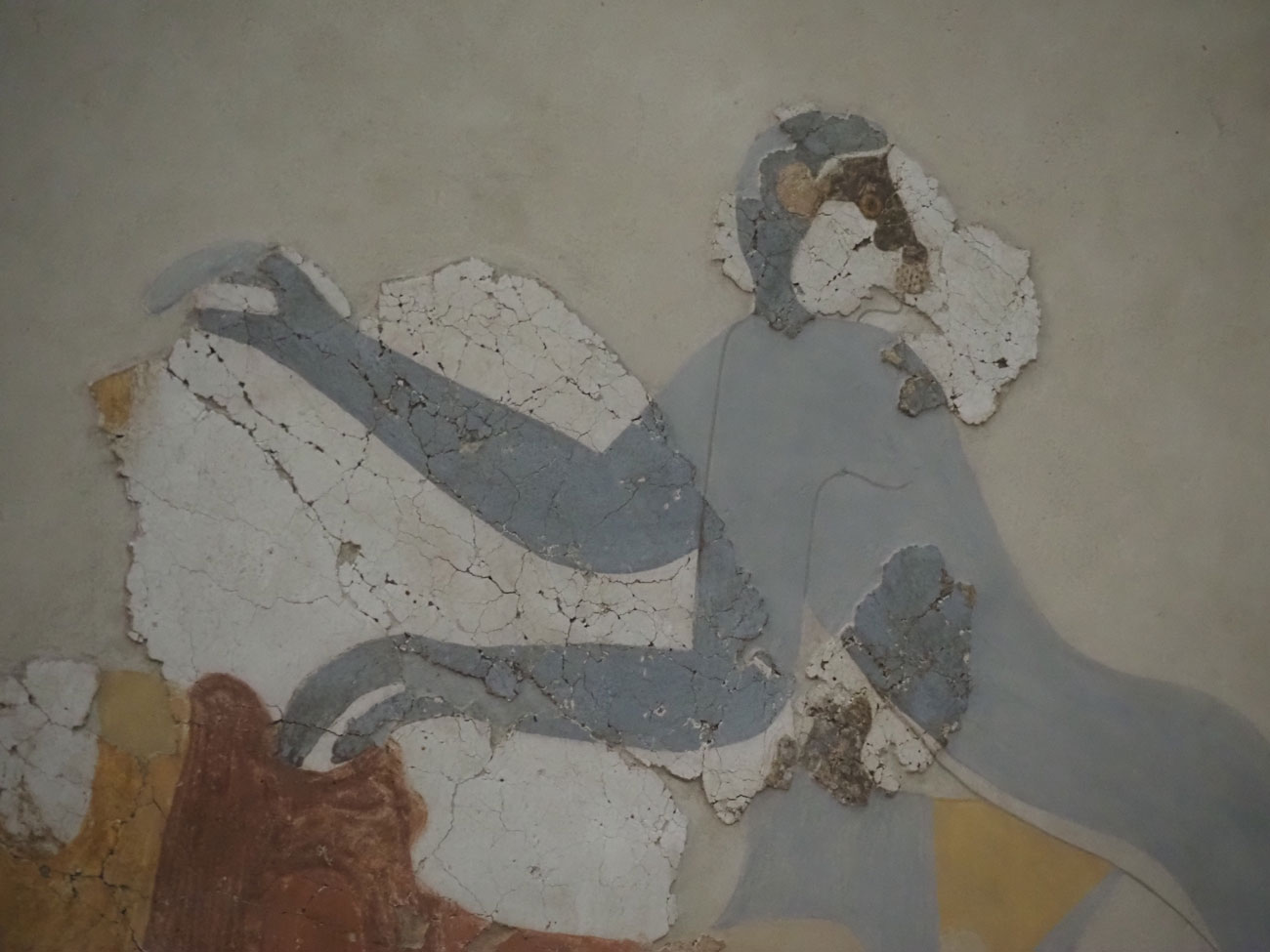
In his memoir, Mda himself speaks about a water-dwelling spirit, referring to Mamlambo as a “water goddess who lives in the Mzintlava River [in the Eastern Cape province of South Africa] but travels in lightning to visit other rivers, including the river that runs in a narrow valley between our own Dyarhom Mountain and the Siqikini Mountain.” He goes on to say that the “true Mamlambo is a beautiful goddess with the torso of a horse, the neck of a snake and the lower body of a fish.” A strain of Xhosa mythology considers Mamlambo to be a “highly dangerous” water spirit that takes the form of “whatever one desires most deeply”—for some, this may be “the shape of a beautiful woman.” Mamlambo, at least in one iteration, is like a Siren of Greek mythology.
Zakes Mda’s novel, The Whale Caller makes no mention of any of this: nothing about Xhosa mythology, nothing about ancestors or mermaids. The protagonist of the novel is a vague and seemingly cultureless and originless person—a kind of deracinated vagabond. In our conversations, Wilson Salukazana spoke about whales in a different way, and he mentioned ancestors only elliptically. But if questions surrounding ancestors and mythology remain oblique, love is declared loudly. That is, both Mda and Salukazana point variously to love and desire as foci of the interspecies encounter. A question arises: does the love expressed by people like Mda and Salukazana actually have anything to do with whales? There is certainly some truth to the charge that The Whale Caller is not about whales at all, that the book fictionalizes whales to such an extent that they become mere stand-ins for human desire. (Recall the water spirit that takes the form of whatever one desires most deeply.) Similarly, it’s unclear what Salukazana means when he says that he “loves the whales at heart.” As far as anything like communication goes, he observes only that whales sometimes spring up when he blows a particular “code” on his horn. But he does not claim to understand why or how that happens. (Eric Davalala would say that it’s an illusion, and that the breaching of the whales does not depend on the horn calls.)
A critic may argue that when Mda (as a novelist) or Salukazana (as a horn player or mere observer) talk about loving whales, the love is so one-sided, so much a projection of human, male desire, that the presence or existence of whales hardly matters. In this sense, the critic may complain, the scenarios are less about interspecies communication than unidirectional desire. And yet, as I emphasize throughout my book Interspecies Communication: Sound & Music Beyond Humanity, the shift from “pure,” semantic communication toward more elliptical concepts is a common and perhaps even inevitable tendency in the communicative endeavor. Music, love, and spirituality are all supplements in Derrida’s sense of the word: they seem to be mere additions to communication, but they are actually essential to many forms of communication.
When it comes to matters of the environment or nature, writers in the global North often hope to find “non-Western” conceptualizations. And they do some-times find them: think, for example, of the under-standing of water in Xhosa cosmology described in this essay, or of anthropological studies of the ways indigenous peoples in Alaska interact with whales. Such work may be illuminating in some respects, but any statement to the effect that “Xhosa people believe that . . .” or “the Inupiat see whales as . . .” runs the risk of extreme simplification or, worse, exoticism. Yes, Salukazana and Mda both come from Xhosa-speaking households, but to say that they somehow hold a “Xhosa belief system” is grossly inadequate. What would that even mean for the cosmopolitan Mda, who grew up with pan-African ideology, plays classical flute but loves jazz above all other kinds of music, received Latin tutoring from South African Communist Party leader Chris Hani, devotes much of his time to bee-keeping and farming activism, and has lived on and off in Ohio for the past several decades? Or what would it mean to Salukazana, who lives in a staunchly Christian and socially marginalized township on the outskirts of an eco-tourism hub? Most of the people in my book (myself included) inhabit multiple, overlapping worlds. Most of the people in my book draw on a range of capacities (historical knowledge, mythical thinking, imagination, aesthetic expression, and philosophical speculation) in their encounters with non-human beings. In writing about those people, I have been similarly inspired.
When it comes to human/animal relations, “belief” seems often to be equivocal and hard to pin down. Especially because we all relate to animals from such complex subject positions, identifying what we believe or think about animals is no easy matter. Here is the important part: we may struggle to find the right language to describe our relationships with animals, but many people have no problem saying that they love animals. Indeed, love was the theme that seemed to turn up time and time again as I was thinking about Mda’s Whale Caller and as I was speaking with Salukazana. Love is one of humanity’s most powerful and ubiquitous emotions, but it is also one of the least understood. Is this because love is, by definition, beyond understanding? Perhaps. The writer bell hooks once argued that our unwillingness to provide a rigorous definition of love is part of the reason we do not know how to love properly. In any event, the preceding discussion suggests that human love for anials falls into different types. The Whale Caller in Mda’s novel has a primarily erotic relationship with the whale, Sharisha, while Salukazana’s relationship with whales is one of quiet admiration (“I love them at heart”) and, perhaps, of corporeal and spiritual protection.
Excerpted from Gavin Steingo, Interspecies Communication (Chicago, 2024).
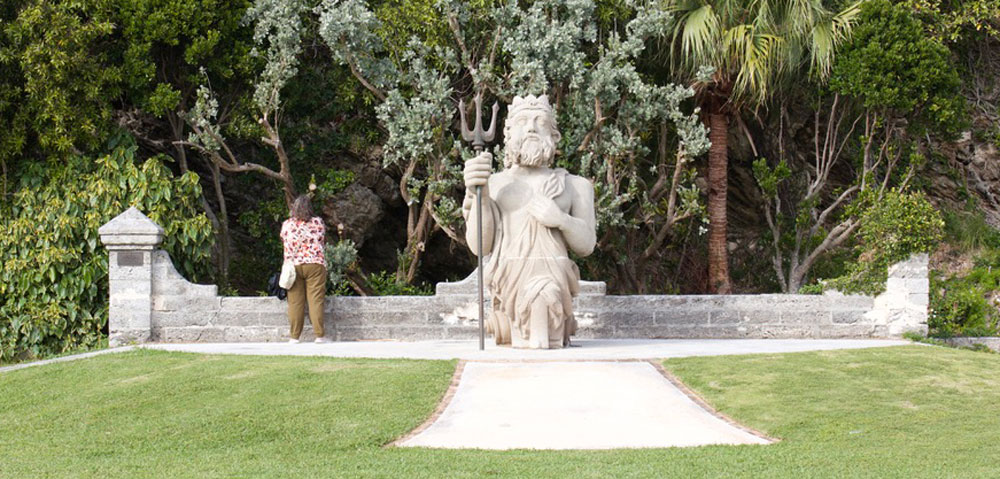
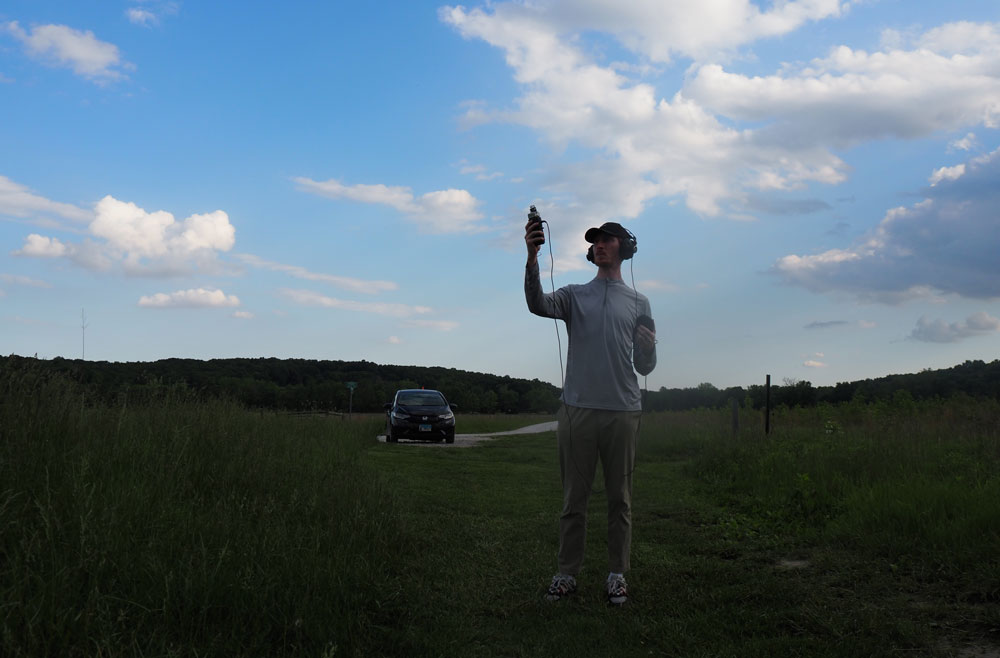
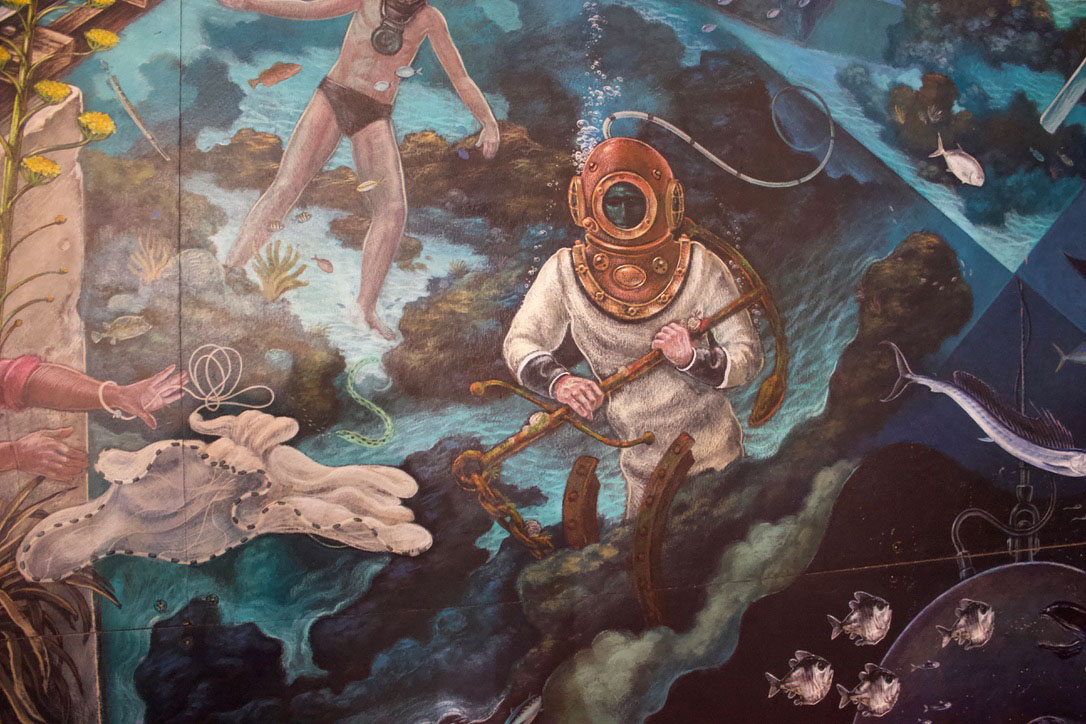
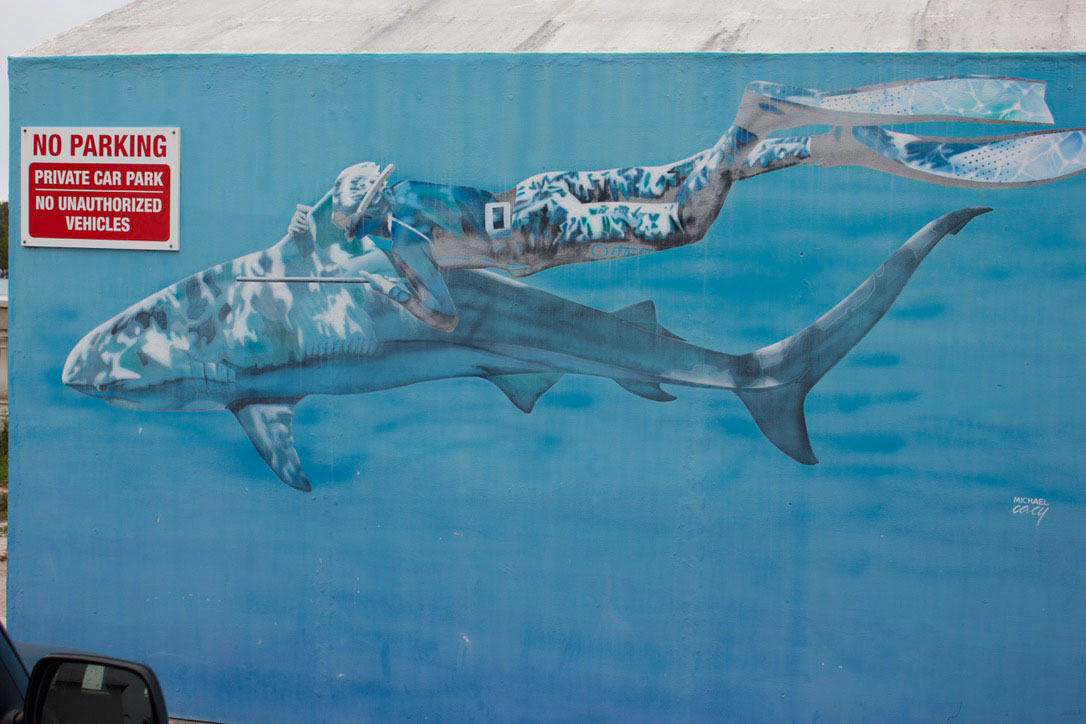
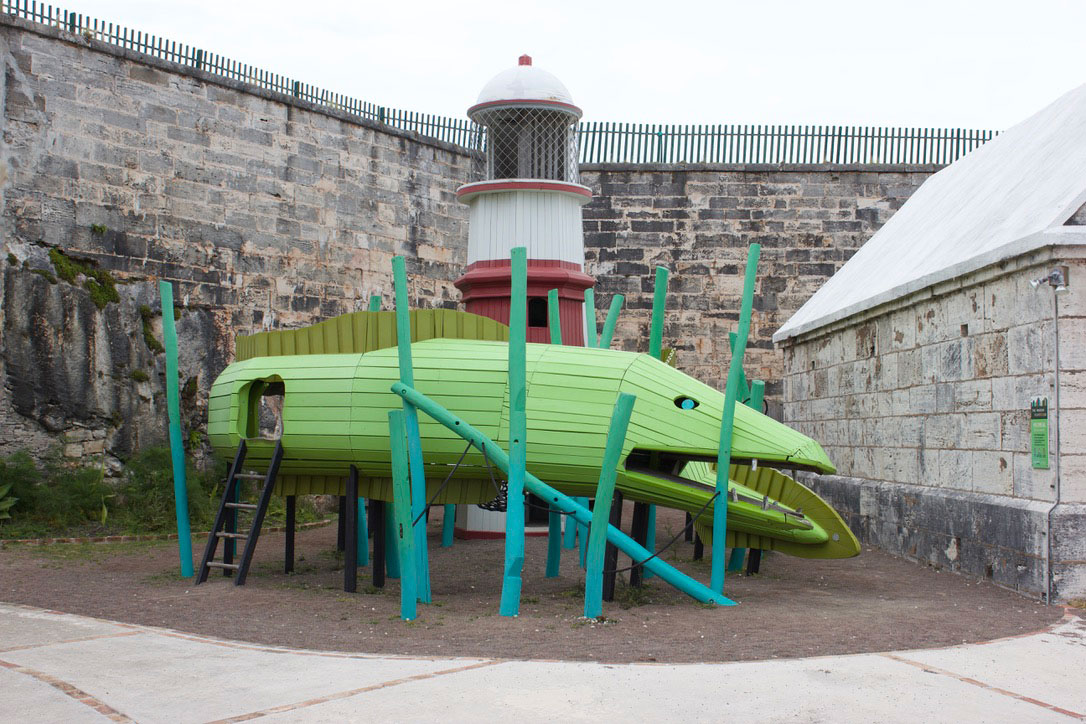
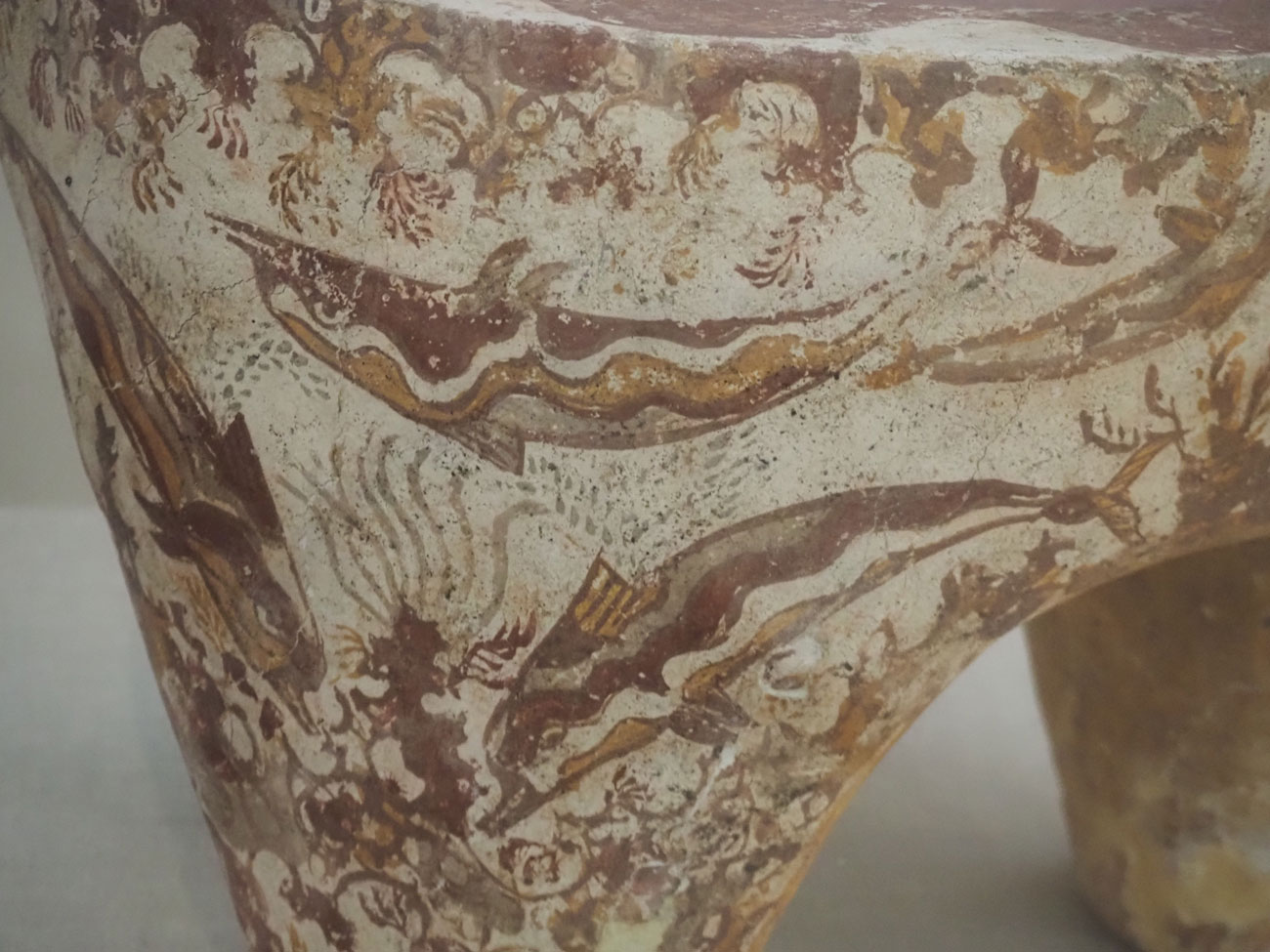
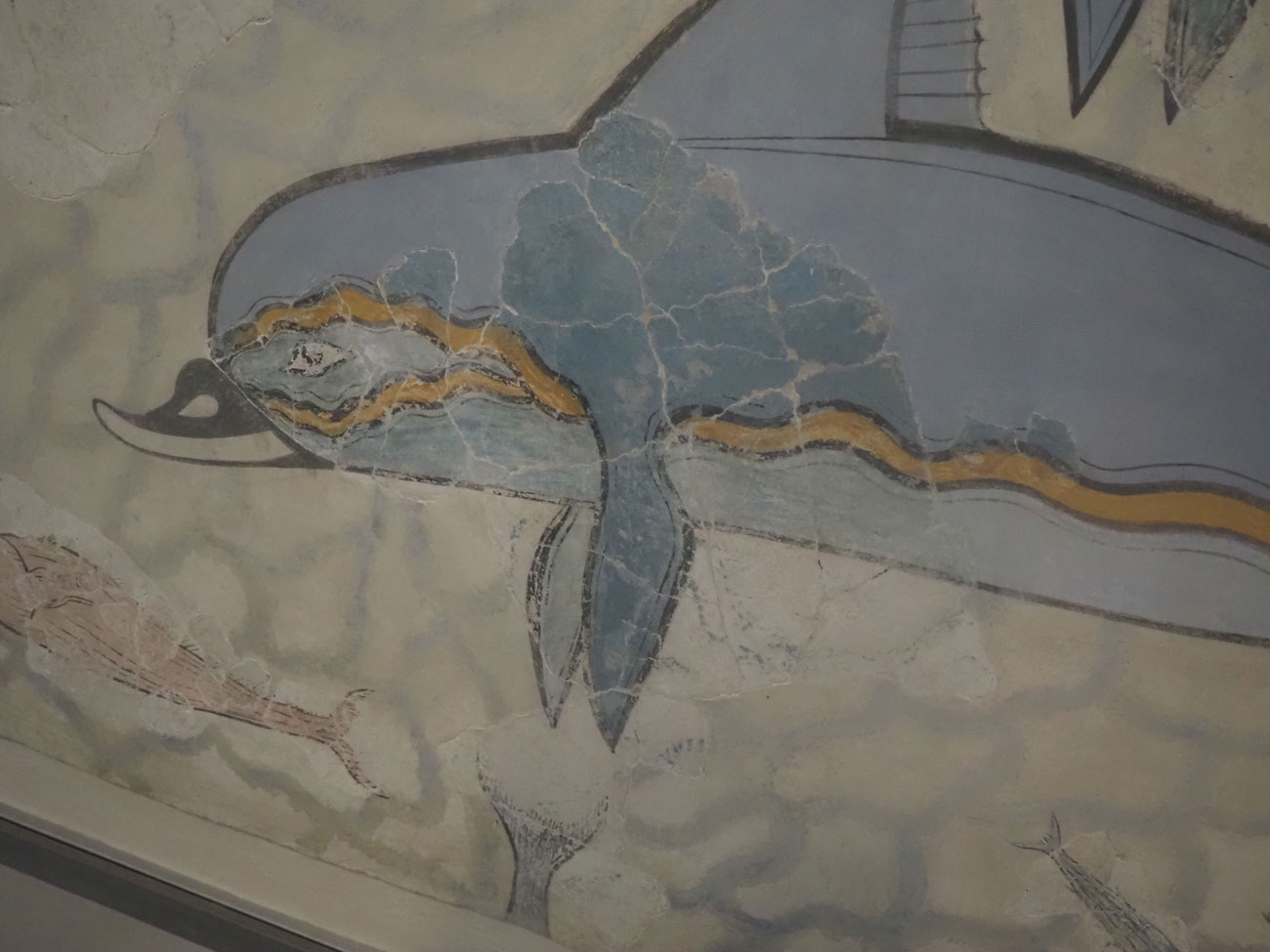
The photo at the top of this page was taken by Helen Kim and is used with permission. All other the photography in this section is by Gavin Steingo. While most of the images are from Hermanus, some are from other places in the world rich in cetacean iconography.